2026-04-24
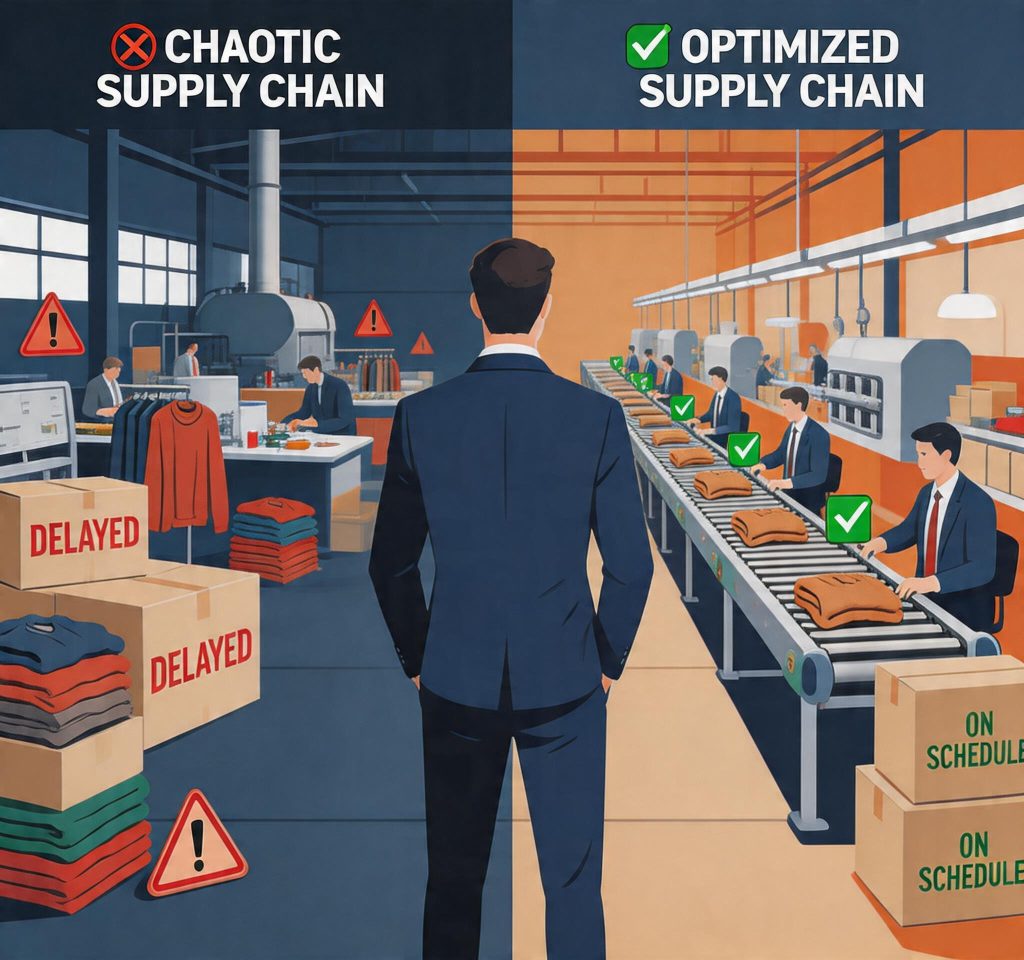
It’s 10 PM. Your phone screen is still glowing. You’ve refreshed your email for the 8th time, and your supplier’s “shipping tomorrow” promise is now 3 days overdue. Your sales team is breathing down your neck, your warehouse is waiting, and you’re just staring at that “in production” status, calculating: How many sales opportunities am I losing with every day of delay?
If you’ve been through this, you’re not alone. According to industry research from the Knitwear Association, 65% of sweater orders experience delivery delays—and honestly, that number still shocks me.
Today, I want to share the 3 most dangerous warning signs we’ve learned from serving 300+ brands. Some mistakes just aren’t worth repeating.
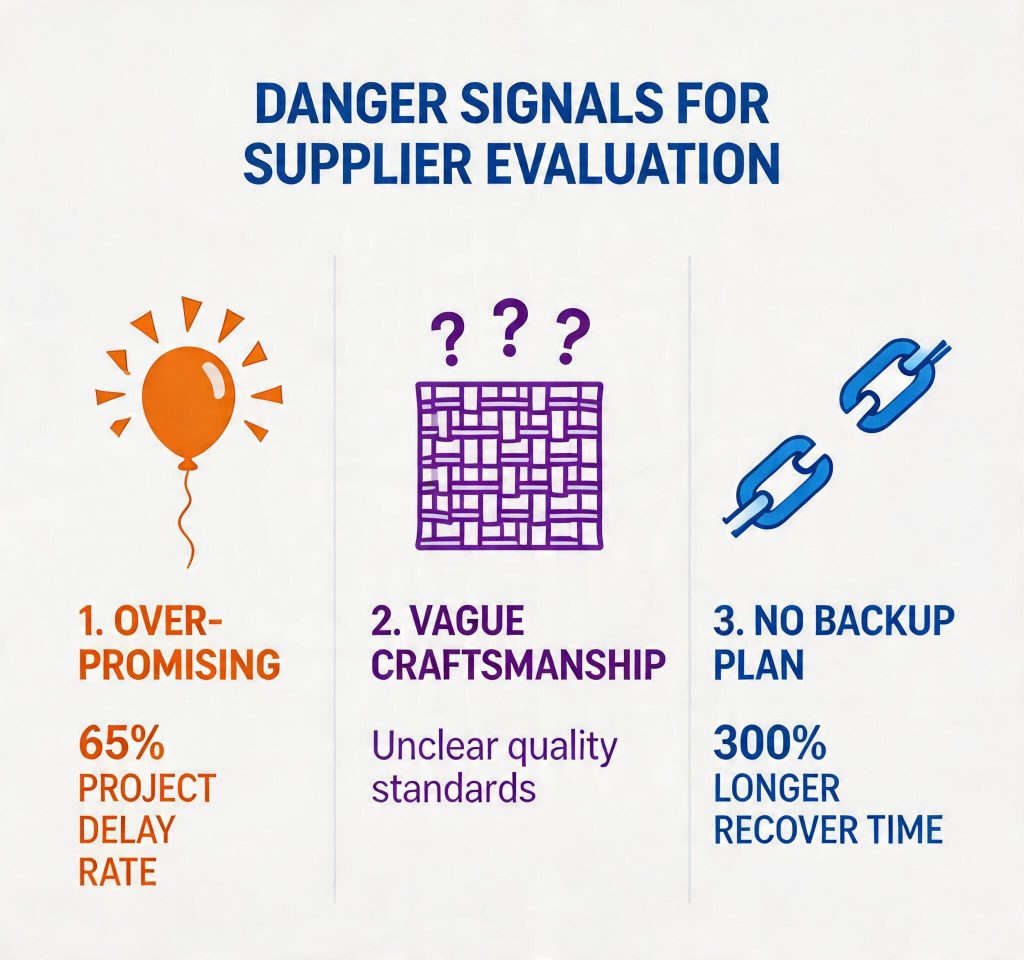
Real conversation (I’ve heard this way too many times): You: “Can you deliver 5,000 pieces in 30 days?” Supplier: “Absolutely no problem! We can get it done in 25 days!”
Here’s how it usually plays out:
Day 25: “Equipment malfunction, needs 2 days to fix”
Day 28: “Yarn delivery delayed by 3 days”
Day 35: Finally shipped, 5 days late
The data: Our analysis shows overpromising suppliers have a 40% higher delay rate than conservative ones. Honestly, when I hear “absolutely no problem” now, my guard goes up.
How to spot it: Ask this one key question: “What’s your contingency plan if something unexpected happens?” If they give vague answers or say “that won’t happen,” be wary. Reliable suppliers will honestly walk you through potential risks.
Common scenario: Your designer brings out a complex jacquard pattern. The supplier glances at it: “No problem, standard technique.”
The reality (I’ve seen this too many times):
3 failed sampling rounds
35% cost overrun
40% schedule extension
The underlying issue: The hidden complexity of knitwear craftsmanship is often underestimated:
Jacquard pattern precision requirements
Multi-color interlacing tension control
Special handling for premium yarns
How to avoid it: Require your supplier to provide:
Detailed craft breakdown diagrams (don’t just look at renderings)
Risk assessment reports (which stages are prone to problems)
Actual data from similar cases (don’t just take verbal promises)
Real disaster scenario (happened last year): Day 10 of production, the main yarn supplier’s factory catches fire.
Supplier A (no backup plan):
Day 1: “Looking for alternative suppliers”
Day 7: “Found one, but 30% more expensive”
Day 15: Production resumes
Total delay: 25 days
Supplier B (has backup plan):
Day 1: “Activating backup inventory”
Day 4: Production resumes
Total delay: 4 days
The staggering difference: Recovery time extends by 300% without a backup plan. That gap could mean missing your entire sales season.
Emergency capability assessment:
Backup yarn inventory (weight: 30%)
Multiple production lines (weight: 25%)
Alternative logistics (weight: 20%)
Emergency protocols (weight: 25%)
Next time you meet a supplier, don’t be polite—ask these 5 questions directly:
“Please provide actual delivery records from your last 3 similar orders” (don’t just look at promises)
“What’s your backup plan if your main yarn supplier has issues?” (tests emergency capability)
“What’s the estimated defect rate for this craft? What’s your historical data?” (tests expertise)
“How do you track production progress? What’s the update frequency?” (tests transparency)
“What’s your maximum capacity bottleneck? How do you handle peak season?” (tests planning)
Evaluation criteria:
80+ points: Premium partner (cherish them)
60-80 points: Workable, but needs close monitoring (don’t let your guard down)
Below 60 points: High risk, suggest having backup options (don’t gamble)
A good supplier is a strategic asset, not just an executor. They should have:
Transparency: Honest communication, no hiding problems (speak up early)
Expertise: Understands the craft, can anticipate risks (not just taking orders)
Reliability: Has backup plans, can handle emergencies (don’t rely on luck)
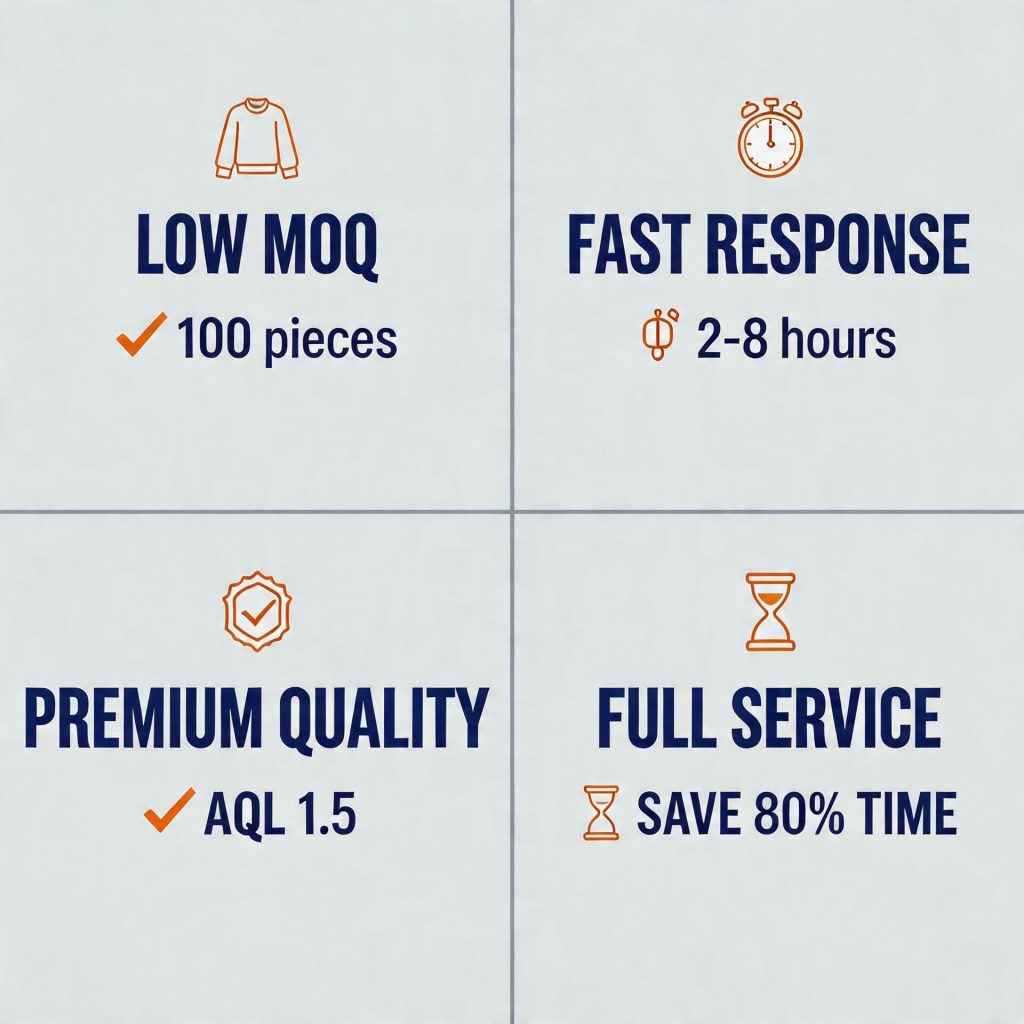
We know these pain points firsthand. At AladdinGo, we’ve turned these lessons into solutions:
We never overpromise: Fact-based assessments with 10% buffer time built in (better conservative than breaking trust)
Craft transparency: Every order includes craft breakdown + risk assessment reports (so you know what to expect)
Robust backup systems: Multi-supplier network + dual production lines + 3 logistics alternatives (prepared for surprises)
How do we solve these pain points through low MOQ, fast response capability, premium quality, and full-service support?
→Learn more about our sweater supply chain solutions → www.aladdingo.com
Tell us about your design and timeline — our team replies within 24 hours.