
If you’re looking for guidance and a clear direction, let’s chat. Drop me a line and let’s explore the possibilities.
2026-07-01

Same sweater, different yarn: how fabric choice creates 2–3× profit differences.
I once saw the exact same sweater design produced in two different yarns. One retailed at €45. The other at €120. Same pattern. Same labor. Same stitching. Different fabric. Different perception. Different profit.
If you think yarn selection is a technical detail you delegate to your supplier, you’re leaving money on the table. In knitwear, fabric typically accounts for 50–70% of your manufacturing cost. It is the single biggest lever you have — bigger than design, branding, or marketing. Get it right, and your customer feels quality before they check the price. Get it wrong, and you read those five devastating words in a review: “Not worth the price.”
European consumers can feel the difference. More importantly, they can feel when something is off. That slight synthetic slipperiness. The unexpected stretch that doesn’t belong. The pill after two washes. They notice. They remember. They don’t come back.
Here’s the European fiber preference hierarchy, backed by market data. Use it as your decision framework.
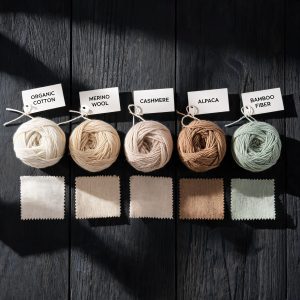
1. Organic cotton. This dominates European sustainable fashion spend — 52.8% of it. If you claim “sustainable” or “natural” and you’re not using certified organic cotton, you’re missing the majority of buyers who actually pay a premium for values alignment. GOTS certification is increasingly expected, not impressed by.
2. Merino wool. The fastest-growing fiber in men’s luxury knitwear. It has natural performance properties — temperature regulation, odor resistance — that justify premium pricing. A merino piece that costs €18 in fabric can retail at €95. The same design in basic cotton? €45 retail, if you’re lucky.
3. Cashmere. The luxury staple. Children’s cashmere is growing at 6.9% CAGR. The key here is traceability. European buyers paying cashmere prices want to know where it came from. If you can’t show that, don’t charge cashmere prices.
4. Alpaca. An emerging segment, now representing ~13.7% of luxury material revenue. Smaller than cashmere, but growing. A smart differentiation play if you’re in the expressive/niche quadrant.
But knowing the hierarchy isn’t enough. You need to understand the cost structure. Here are real numbers:
| Fiber | Best For | Price Tier | European Demand | Sustainability Cred |
|---|---|---|---|---|
| Organic cotton | Basics, everyday wear | Mid | Very high | GOTS cert expected |
| Merino wool | Performance, men’s luxury | Premium | Fastest growing | Mulesing-free expected |
| Cashmere | Luxury, gifting | Luxury | Stable, children’s | Traceability key |
| Alpaca | Textured, statement pieces | Premium | Emerging | Natural, ethical |
| Bamboo/Lyocell | Sustainable alternatives | Mid-Premium | Growing | Certifications help |
| Cotton + elastane | Fitted styles | Mid | Moderate | Must disclose % |
The same design in different yarn creates 2–3× profit margin differences. Here’s the math:
Organic cotton version:€8 fabric cost → €25 total COGS → €45–€65 retail
Merino wool version: €18 fabric cost → €40 total COGS → €95–€120 retail
Same pattern. Same labor. You chose the yarn. You chose the profit.
Now, the hidden cost of “cheap” fabric. This is where brands die quietly.
Hidden elastane. Your supplier adds 5% elastane “for comfort” without telling you. Your customer buys a “100% natural” sweater, wears it, notices the synthetic stretch, leaves a 2-star review: “Not as described.” That single review costs you more than the “savings” from the cheaper quote.
Fabric substitution. You approve a sample in organic cotton. The bulk order arrives in a cotton-poly blend. The supplier says, “Same look, better price.” Your customer says, “Feels cheap.” You can’t win that argument.
My rule: never let a supplier choose your yarn without you understanding what they’re choosing. Before committing to bulk, always request:
Ask these questions every time:
If your supplier can’t answer clearly, you don’t have a supplier. You have a gamble.
The fabric you choose is the promise you make to your customer. Organic cotton promises honesty and everyday quality. Merino promises performance and quiet luxury. Cashmere promises indulgence. Alpaca promises discovery.
Make sure your promise matches your price point, your customer, and your quadrant. Because once that sweater is in their hands, the yarn does all the talking.
Tell us about your design and timeline — our team replies within 24 hours.