
If you’re looking for guidance and a clear direction, let’s chat. Drop me a line and let’s explore the possibilities.
2026-06-12

Your Pinterest board is ruining your brand. Find out how.
You’ve got 500 pins. Scandinavian minimalist one day. Breathtaking Italian knits the next. Thicker Irish cable on Wednesday. And each time you start to decide on your collection, you find yourself faced with making choices based on your own personality.
Your style is not your taste. It’s not self-expression by the founder. It’s a business decision. A filter that either attracts or rejects your clients – confusing filters reject everybody.
In Europe, 52.8% of sustainable fashion shoppers purchase natural and organic materials. It’s not an interesting fact. It’s a set of beliefs. Your style must respond to the question of: what does my client believe in? Not what I like. What do THEY believe is worth spending money on?
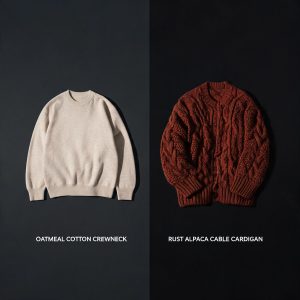
Enter two boutiques in Milan.
Left rack: oatmeal, sand, charcoal. Three colors. Clean lines. Tags on organic cottons. A German tourist comes in, feels the fabric, nods, purchases two garments without asking the price. She buys the idea of “less but better.” She pays a premium for understated elegance.
Right rack: rust, mustard, forest green. Alpaca blends. Big cables. Handwritten label: “Spun in the Italian Alps.” A Spanish customer comes in, reads the story card, purchases the rust cardigan as a gift. She buys the idea of texture and warmth. She pays a premium for uniqueness.
The same shop. The same two styles. Different belief systems of two customers. No confusion.
Imagine you put these racks together. The German tourist finds herself in the midst of a “minimalist” boutique and is left feeling confused. The Spanish customer finds her self in the minimalist boutique and finds it to be too simple for her. You lost them both.
Style must depend on the country — not vice versa. Here is my geographic style map:
Germany/Denmark/Benelux: Clean lines, neutral colors, organic cotton, “less but better.” Markets here are purchasing-power rich and have high sustainability demands. They will gladly pay €95 for a merino crewneck that deserves the price. But they won’t spend €45 on a trendy product that won’t last long.
Spain/Italy: More vibrant colors, textured yarns, heritage stories. Markets in these regions react emotionally to quality and craftsmanship. Italian knitwear heritage is not an empty marketing trick – it is the heritage of your brand that allows setting the right prices.
Trying to hit both regions with one type of product is a mistake. Trying to be everything at once is being nothing at all.
The link between the style and profit is direct: heritage-inspired knitwear allows setting premium prices. “Made in Europe” and artisanal positioning appeal to independent boutique buyers that run away from fast fashion. Micro-brands are thriving in Europe now – as long as they know their style.
How do you choose? Apply Style Positioning Quadrant. Two axes. Four boxes. Select one. Stick to your position for at least two seasons before considering expansion.
| Quadrant | Characteristics | Best For |
|---|---|---|
| Minimal + Mass | Clean basics, competitive pricing | Volume play, online-first |
| Minimal + Niche | Premium materials, quiet luxury | Germany, Denmark, premium boutiques |
| Expressive + Mass | Bold colors, trend-driven | Spain, fast turnaround |
| Expressive + Niche | Artisanal, heritage storytelling | Italy, concept stores |
The biggest blunder I see in young brands is trying to occupy two quadrants simultaneously. “We are minimalistic yet bold.” Wrong! Your customers will figure that out right away. They do not think “versatility”; they think “confusion.”
Your Pinterest board can consist of 500 pins. Your brand can never do that. Your brand needs to stick to one quadrant. One philosophy. One customer.
Choose. Implement. Win that quadrant. And only after winning it, see if a second beachhead is worth occupying.
Tell us about your design and timeline — our team replies within 24 hours.